

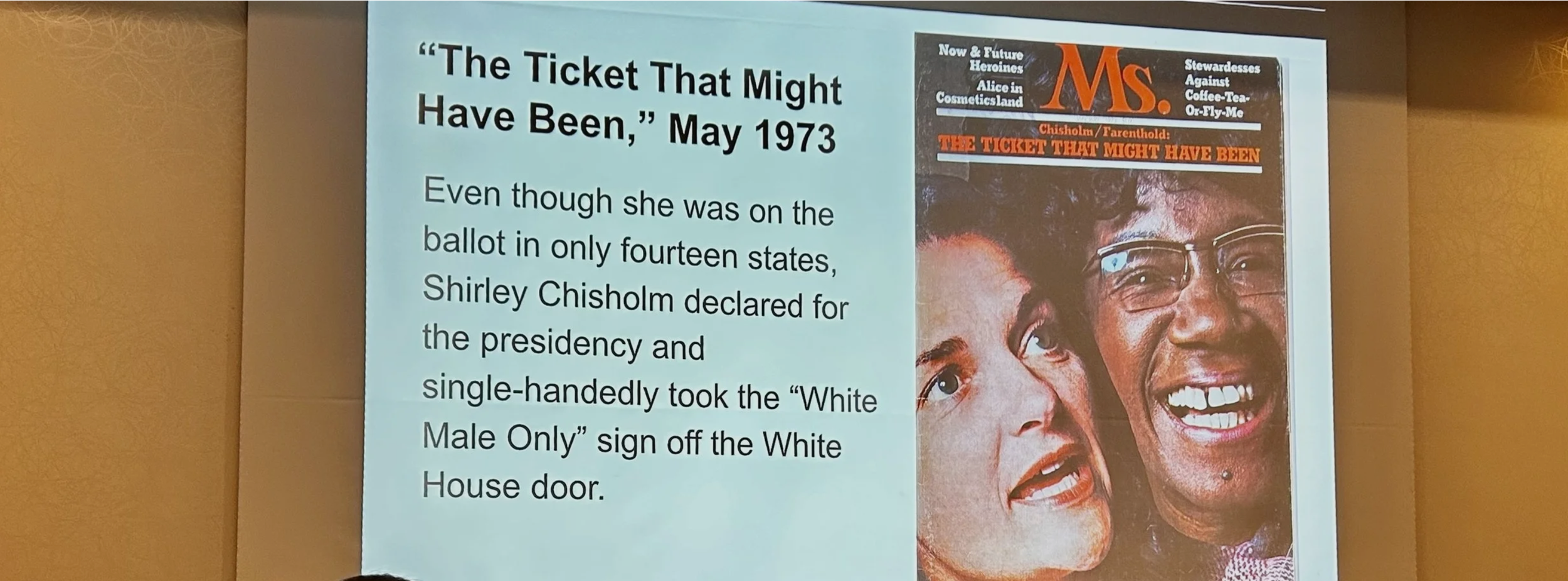
Meet the Team
-
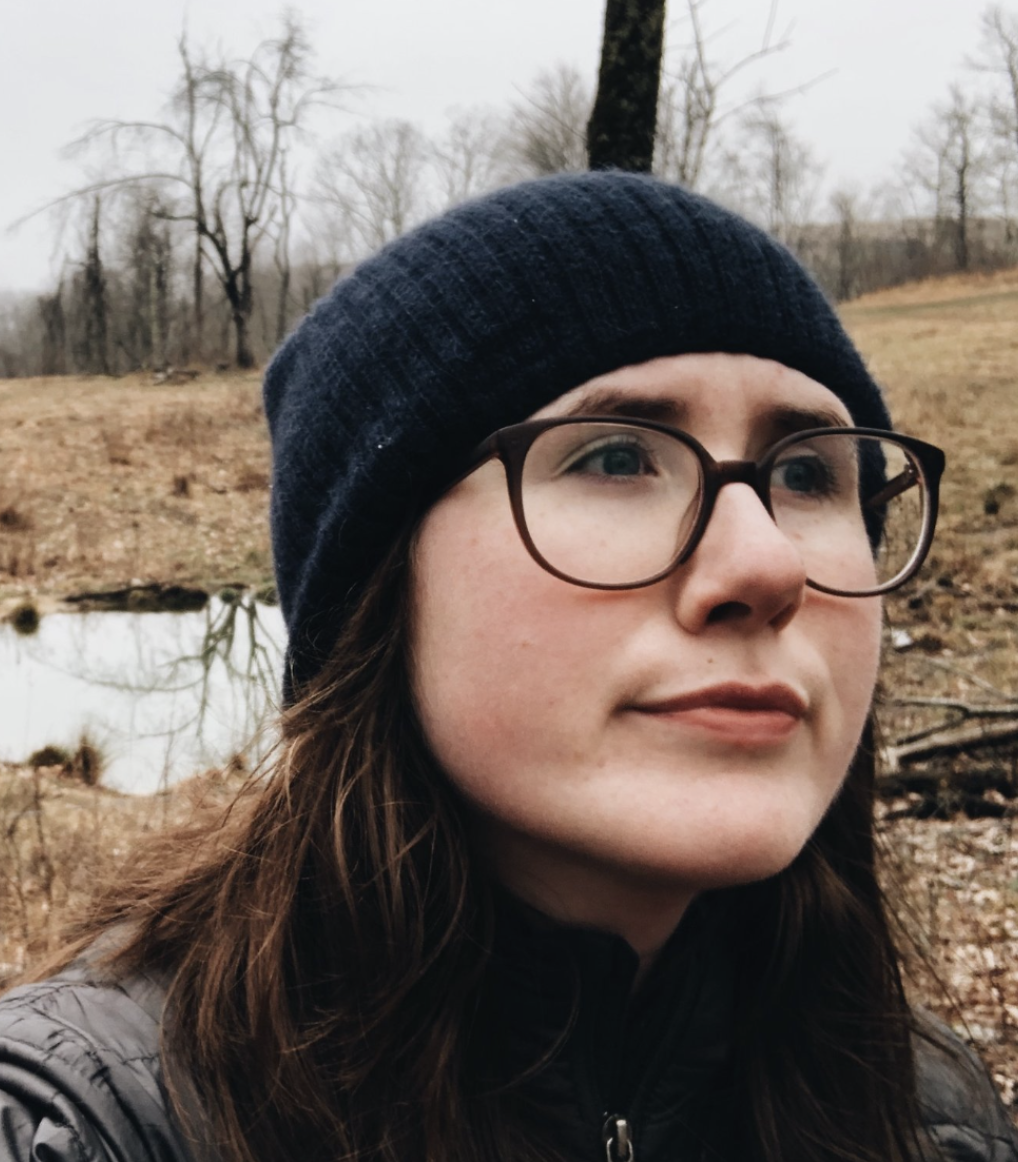
CO-PRESIDENT, KATELYN CAMPBELL
Katelyn M. Campbell is the Postdoctoral Research Scholar and Program Advisor to the Black and Indigenous Feminist Futures Institute at the University of Virginia, which is housed in the Department of Women, Gender, and Sexuality. Her research is rooted in the fields of Rural Queer Studies and Critical Ethnic Studies and takes up the womyn's land movement as a site for understanding intergenerational feminist memory, the politics of inheritance, and feminist relationships with ecology. Katelyn earned her Ph.D. in American Studies from the University of North Carolina at Chapel Hill. She grew up in West Virginia and represented the state as its 2016 Harry S. Truman Scholar. Katelyn previously served on the Board of WGS South as Secretary (2021-2026). You can learn more about her work on her website at katelynmcampbell.com.
-

CO-PRESIDENT, LYDIA FERGUSON
Lydia E. Ferguson is Senior Lecturer in Kennesaw State University’s Department of English and Affiliate Faculty in American Studies and Gender & Women’s Studies. A nineteenth and early twentieth-century Americanist researching race, age, sexuality, and disability within Material & Intangible Culture, she is also an archival collector and digital humanities practitioner. Lydia is co-founder of the Aegis Digital Museum, an open-access resource built in collaboration with students, educators, activist-scholars, and community organizers. She has previously served on the WGS South Board as Director of Marketing and Communications (2023-2026). aegisdigitalmuseum.kennesaw.edu/
-

IMMEDIATE PAST PRESIDENT, FRANCES HENDERSON
Frances Henderson is Associate Professor of Gender and Women’s Studies at the University of Kentucky, whose research include black feminisms and race in social movements in the US. Her work “Black Rural Lives Matter” appeared in Transforming Anthropology and her writings on equity in teaching has been featured in Conditionally Accepted in the Chronicle of Higher Education. She is currently working on a manuscript about anti-racist activism in East TN and the ways in which this activism dovetails with Appalachian justice movements and the Movement for Black Lives.
KYfrances.henderson@uky.edu -
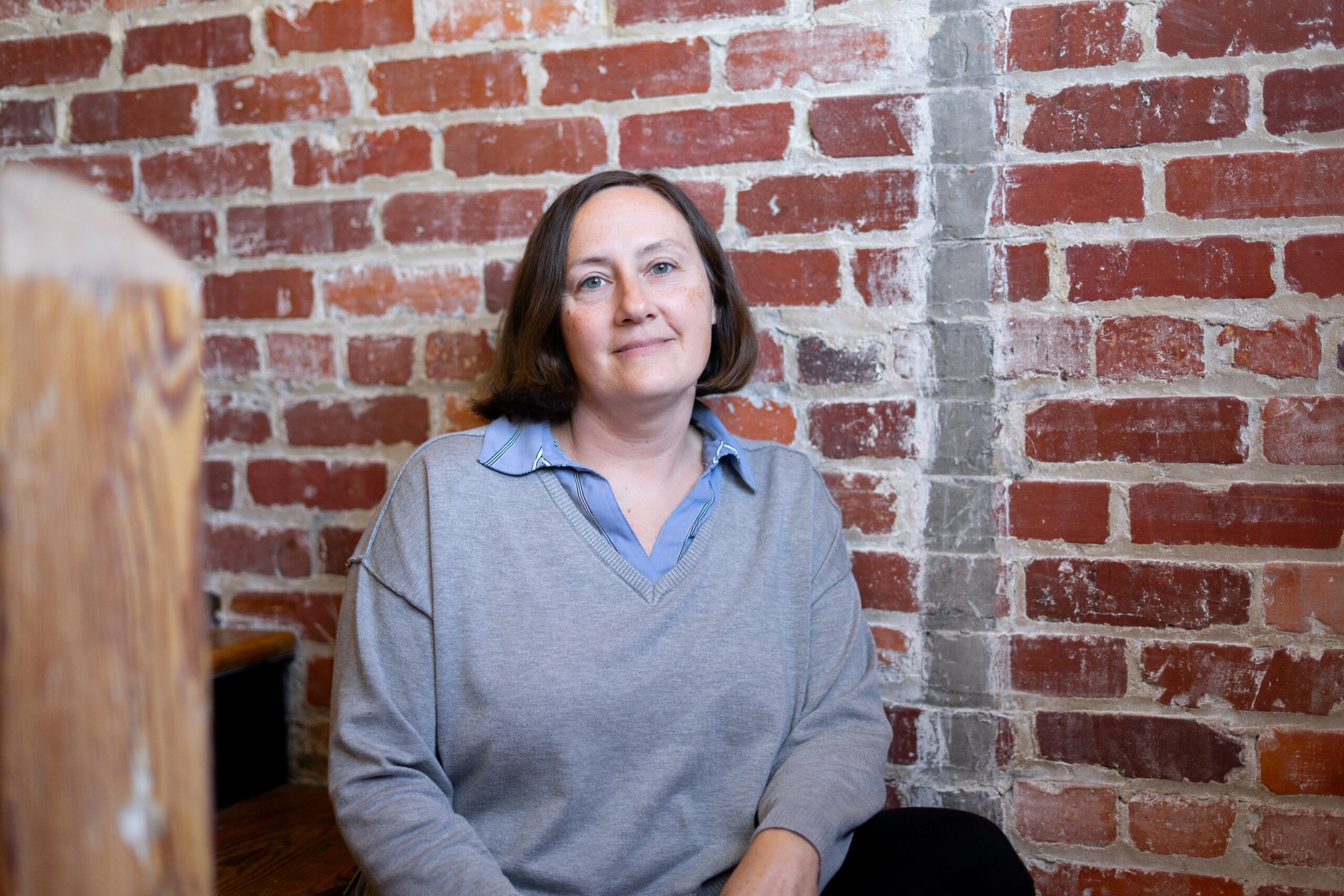
PRESIDENT ELECT, EMILY TAYLOR
Emily Taylor is an Independent Scholar and feminist writer based in South Carolina. Dr. Taylor was previously associate professor of World Literature at Presbyterian College in Clinton, South Carolina. She earned her Ph.D. in Comparative Literature from the University of Oregon and has published essays in Caribbean-Irish Connections, The Journal of West Indian Literature, The Routledge Companion to Anglophone Caribbean Literature, and The Southern Quarterly. She writes the newsletter Hot Feminism: Letters from South Carolina.
-
DIRECTOR OF MEMBERSHIP AND DEVELOPMENT, SHENÉE SIMON
Shenée L. Simon is a fierce feminist. Founder of S.H.E. Collective, Inc., an organization advancing women’s peace and security (WPS) for BIPOC girls and women, centering spirituality, wellness, and environment. She was a 2022 Women’s Earth Alliance Accelerator Fellow, and 2020 WCAPS Fellow. Shenée chairs the SW Region of Truman National Security Project and Co-Leads The Gender & Climate Justice Circle for the Society of Gender Professionals. She is pursuing a Masters of Divinity at Candler School of Theology-Emory University and holds M.A. degrees in Women & Gender Studies and Human Resources:Nonprofit Management. Simon is a contributing author to the forthcoming anthology, World Making in Nepantla: Feminists of Color Navigating Life and Work in the Pandemic, releasing in January. Shenée is a proud Army spouse and homeschooling mama of 4. She previously served in this role on the Board from 2019-21.
-
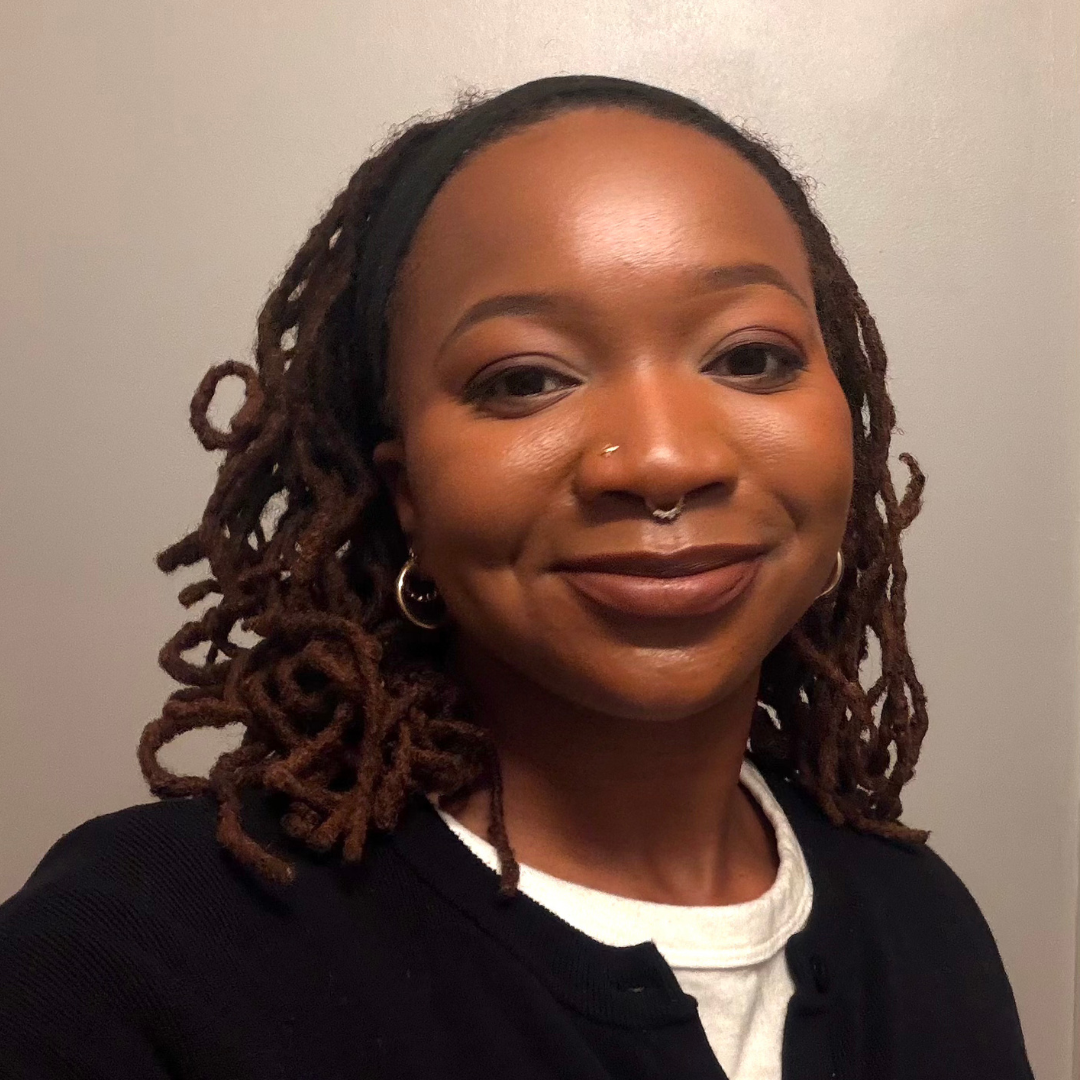
SECRETARY, MONTIA DANIELS
Montia Daniels is a Ph.D. Candidate in the Harriet Tubman Department of Women, Gender, and Sexuality Studies. She is a McNair Graduate Fellow, who has received fellowships and grants from the Southern Equality Research Center, Black Communications and Technology Lab, and The Clarice Smith Performing Arts Center. Her most recent publication is in Southern Cultures entitled “God Loves Women, and I Do Too: The Spiritual Communities of Southern Black Queer Women and Nonbinary Folks” (2025).
Their dissertation research is interested in Southern Black queer women, girls, and nonbinary (SBQWGNB) folks’ daughtering experiences in sites that are imagined to be impossible for Black queer living, specifically home. Their research specifically focuses on North Carolina, South Carolina, and Virginia. Her work engages with Black feminist geographies, Black queer studies, and religious studies, as well oral history, autoethnography, poetic inquiry. She has presented her work at the American Studies Association, National Women’s Studies Association, WGS-South, Oral History Association, and more. She has a forthcoming poetry and sculptural project with the Black Homeplaces Project on Black queer girlhood, mother-daughter relationships, and recipes.
-
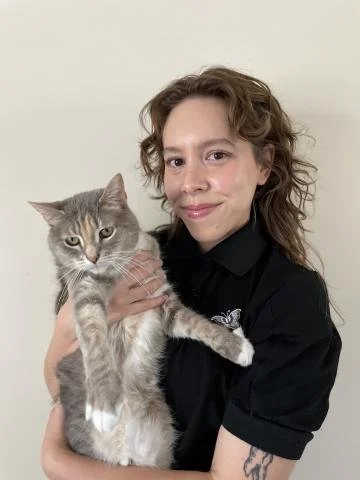
DISABILITY CAUCUS CHAIR, ANASTASIA TODD
Dr. Anastasia Todd’s first first book, Cripping Girlhood (winner of the Winner of the 2022 Tobin Siebers Prize for Disability Studiesin the Humanities), offers a new theorization of disabled girlhood, tracing how and why representations of disabled girls emerge with frequency in twenty-first century U.S. media culture. It uncovers how the exceptional figure of the disabled girl most often appears as a resource to work through post-Americans with Disabilities Act (ADA) anxieties about the family, healthcare, labor, citizenship, and the precarity of the bodymind. In paying critical attention to disabled girlhood, the book uses feminist disability studies to rupture the unwitting assumption in girls’ studies that girlhood is necessarily non-disabled. Her new project extends her work on crip digital cultures to think more deeply about disabled youth and their affective attachment to their smartphone, as a material, intimate, and survival object.
-
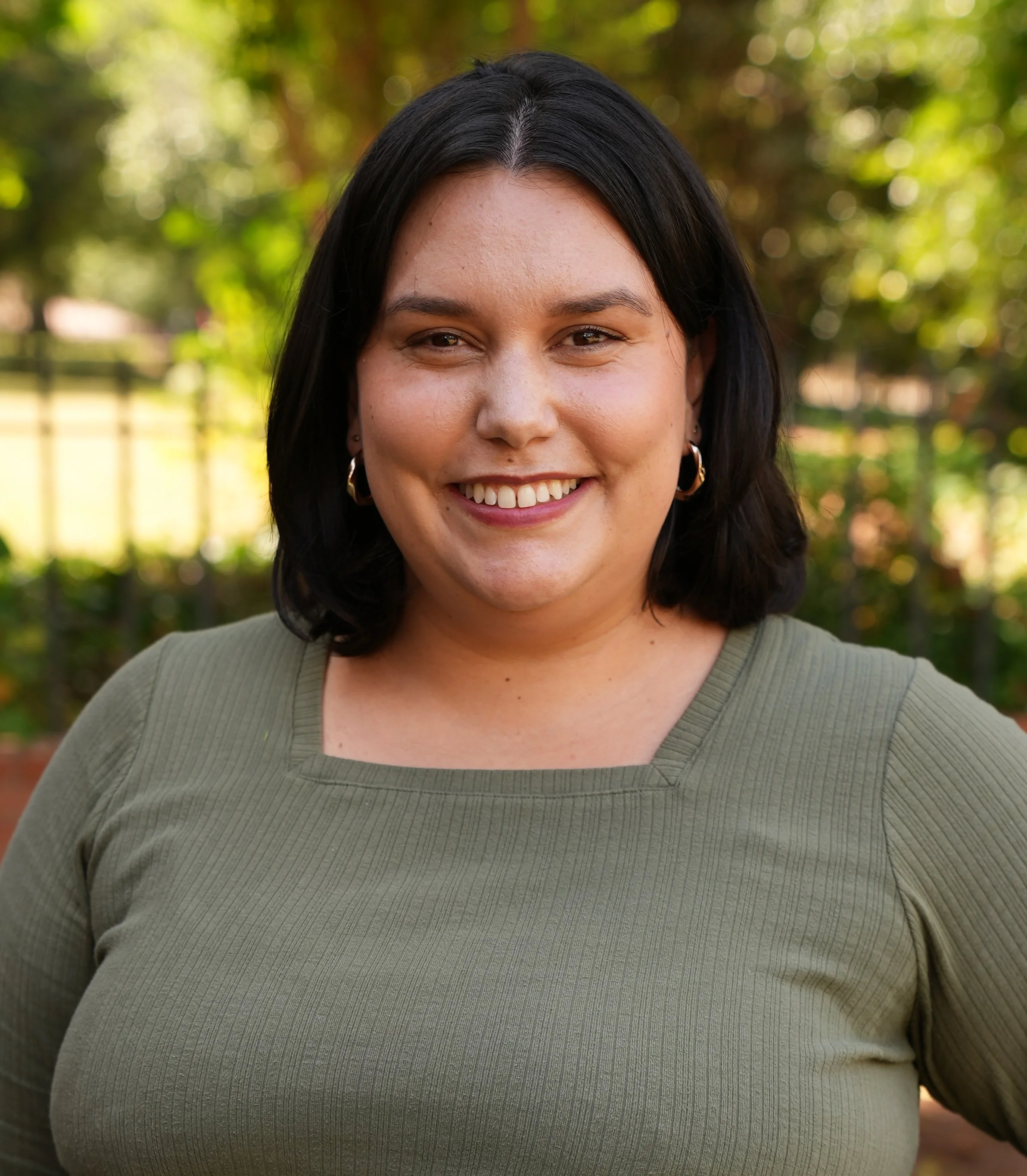
FAT CAUCUS CHAIR, ANNIE ELLEDGE
Annie Elledge (she/her) is a feminist political geographer and interdisciplinary fat studies scholar interested in the politics of body size, gender, and disability in the U.S. South. She is a Part-Time Assistant Professor of Gender and Women Studies at Kennesaw State University. Annie received her Ph.D. in the Department of Geography and Environment at the University of North Carolina at Chapel Hill. Her dissertation research examines how fat people engage with weight-inclusive movement spaces. More broadly, Annie’s work engages feminist and crip/queer theory, qualitative methods, and place-based research to understand the everyday production of the ideal citizen in the United States. You can learn more about her work at anniemelledge.com.